From the physics laboratories of Clifton to a ghost-town test shaft in the Nevada desert, Bristol’s fingerprints are on almost every chapter of Britain’s nuclear weapons story. It is a connection the city has rarely had to confront, until now.
On the 26th of November 1991, deep beneath the Pahute Mesa of the Nevada desert, a nuclear device detonated in a shaft bored hundreds of feet into the rock. The explosion, recorded as yielding less than twenty kilotonnes, was the last nuclear weapon the United Kingdom would ever test. Its official designation within the American Operation Julin series was two words: Julin Bristol.
For most Bristolians, the name registers as little more than a coincidence; the Nevada Test Site had a habit of borrowing place-names, and Bristol happened to be the name of a ghost town in the Mojave. Yet, this coincidence hints at Bristol’s deep, often unseen, involvement in shaping Britain’s nuclear deterrent, a connection that should inspire pride and curiosity in the audience.
This is the opening article in Exposure’s series, which aims to reveal Bristol’s crucial yet often overlooked role in Britain’s nuclear deterrence, making its contributions more relevant to military history enthusiasts.
The Physicists of Park Street
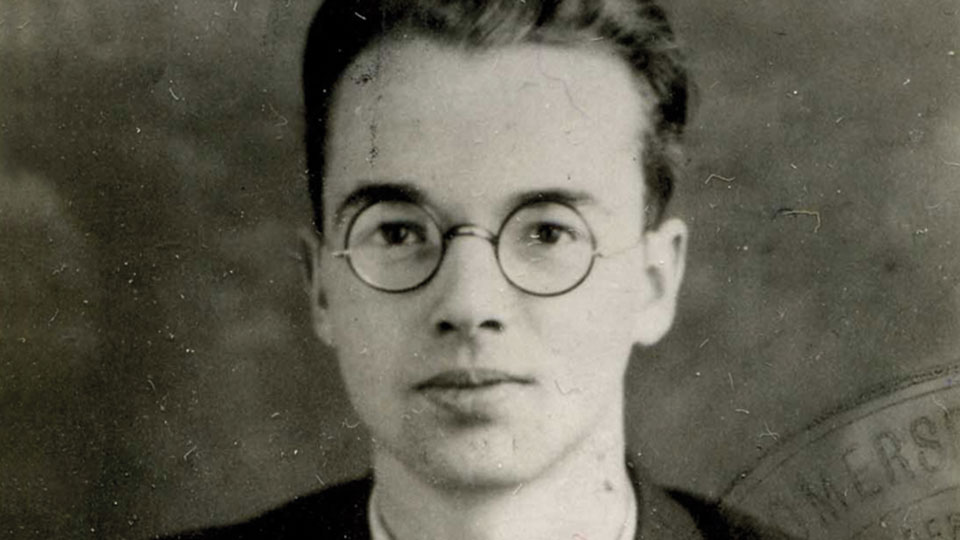
The story begins not with a bomb, but with a telephone call and a cup of tea. In October 1933, a young German refugee named Klaus Fuchs was introduced to Nevill Mott, the Melville Wills Professor in Theoretical Physics at the University of Bristol’s H.H. Wills Physical Laboratory, by Ronald Gunn, a director of Imperial Tobacco and a known Communist sympathiser. Mott’s decision to take Fuchs on as a research assistant was pivotal, shaping the course of nuclear history and highlighting Bristol’s role in this critical era.
At the time, the Bristol physics department was already among the most distinguished in Britain. Under the directorship of Arthur Tyndall, the H.H. Wills Laboratory had assembled a constellation of talent that sat at the very forefront of quantum mechanics.
Mott’s own work on the theory of metals and alloys, developed alongside his colleague Harry Jones, had established Bristol as a world centre for understanding the behaviour of electrons in solids, research that would later prove essential for the firing mechanisms of nuclear warheads. Cecil Powell, meanwhile, was pioneering photographic emulsion techniques for detecting sub-atomic particles; methods that would be directly useful in studying fission neutrons. The atmosphere was electric. It was later reported that by 1939, the potential for an atomic weapon had become “common tea-table talk” among Bristol’s researchers.
That Fuchs was an extremely talented physicist-theoretician can be seen by his wonderful papers, which are cited even in our times. For a man of his calibre I foresaw a great career in physics.
Nevill Mott, recalling Klaus Fuchs, Bristol Physics, 1933–37
Fuchs completed his doctorate under Mott in 1937, publishing a series of papers on the elastic constants and cohesive forces of metals that remain cited today. The connections he forged in Bristol were critical. When Rudolf Peierls, one of the two physicists who would write the founding document of the British atomic bomb programme, was looking for a theoretician to assist him in 1941, he turned to Fuchs, whom he had known from Bristol. The rest, in the most literal sense, is history.
The MAUD Committee and Bristol’s formal role
In March 1940, the Frisch-Peierls memorandum, written at the University of Birmingham, transformed the atomic bomb from a theoretical curiosity into a technical objective by demonstrating that the critical mass of uranium-235 required for a detonation was far smaller than had been assumed, likely between one and ten kilograms. The British government responded by forming the MAUD Committee to investigate the feasibility of the project. The University of Bristol was one of only five academic institutions, alongside Birmingham, Cambridge, Liverpool, and Oxford, formally tasked with carrying out the necessary research. Bristol’s contribution centred on the theoretical properties of metals and alloys, and on the behaviour of atomic collisions: unglamorous but foundational work that underpinned everything from fission calculations to the design of explosive lenses.
Key Bristol figures in the early programme
Nevill Mott, Melville Wills Professor of Theoretical Physics. His work on wave mechanics and the theory of metals provided the groundwork for warhead firing mechanisms. During the war, he pivoted to the explosive fragmentation of bomb cases.
Cecil Powell developed photographic emulsion techniques for neutron detection, which were later used in fission studies. Winner of the Nobel Prize in Physics, 1950.
Klaus Fuchs, PhD student under Mott, 1933–37. Later, a principal theoretician on the British Tube Alloys project and the American Manhattan Project. Convicted in 1950 of passing nuclear secrets to the Soviet Union.
Herbert Skinner, Bristol-trained physicist who developed crystal diodes for radar research and later became deputy director at Harwell. It was Skinner to whom Fuchs finally confessed.
The spy in the laboratory
No account of Bristol’s nuclear history can avoid Klaus Fuchs. The document of record on this subject occasionally frames his Bristol years as peripheral; it claims he arrived in 1934, sponsored by “the Gunn family.” The facts are slightly different. Fuchs arrived in Bristol in October 1933, fleeing Nazi Germany after the Reichstag fire. It was Ronald Gunn, a director of Imperial Tobacco, a Quaker, and, as it would later emerge, a Communist sympathiser, who introduced him to Mott. Fuchs spent four formative years in Bristol, not three, building the network of relationships and the scientific reputation that would secure him a place on the most secret weapons programme in British history.
The revelation in 1950 that Fuchs had passed critical technical data to the Soviet Union, including details of the implosion mechanism used in both fission and thermonuclear weapons, sent shockwaves through the British scientific establishment. The Bristol community was not spared. His former supervisor, Mott, and his friend Herbert Skinner, who had, in a detail of almost unbearable irony, been the person to whom Fuchs had finally confessed, both faced professional scrutiny. The case threw a long, dark shadow over the city’s relationship with the programme it had helped to build.
The Engines of Deterrence
If the university provided the intellectual foundations, the Bristol Aeroplane Company, based at the vast Filton works on the city’s northern edge, provided the muscle.
From the early 1950s through to the end of the Cold War, Filton was the principal source of the engines, missiles, and defensive systems that defined Britain’s nuclear posture in the air.
The centrepiece was the Bristol Olympus engine. Powering the Avro Vulcan B2, one of Britain’s three V-bombers and the primary delivery vehicle for its nuclear arsenal throughout the 1960s and into the 1970s, the Olympus was a world-first: the first twin-spool axial-flow turbojet engine, capable of pushing the Vulcan above 50,000 feet, initially beyond the reach of Soviet interceptors. The engine proved so reliable and so powerful that it outlasted the Cold War entirely, eventually propelling the Vulcan’s final combat missions over the Falklands in 1982 and serving as the basis for the powerplant of Concorde.
As Soviet surface-to-air missiles improved in the late 1950s, the viability of sending crewed aircraft to fly directly over targets became questionable. Britain’s response was the Blue Steel stand-off missile, a weapon that allowed V-bombers to launch their payload from up to 100 miles distant. The propulsion system, built by Bristol Siddeley (the product of a merger between Bristol Aero-Engines and Armstrong Siddeley), was the Stentor, a dual-chamber liquid-fuelled rocket motor that accelerated Blue Steel to Mach 3 at altitude. Without it, the V-force would have become obsolete a decade earlier.
During the Cuban Missile Crisis of October 1962, Vulcan bombers sat on the Filton runway with engines running and nuclear weapons loaded, crews in their seats, ready for take-off within minutes.
Less well-known is the Bloodhound surface-to-air missile, a sophisticated, long-range interceptor designed to protect the V-bomber airfields and government command infrastructure from Soviet air attack. Bristol was the lead contractor, and the Bloodhound was powered by two Bristol Thor ramjets. The weapons surrounding Britain’s nuclear deterrent were, in a very literal sense, built in the same postcode as the aircraft delivering them.
There was also a stranger chapter. In 1951, at the height of anxiety about a potential “bomber gap” with the Soviet Union, Bristol Aircraft proposed the Type 182, codenamed Red Rapier, an expendable, pilotless nuclear bomber intended to fly at high subsonic speeds without risking a crew. More exotic still, production versions were to be constructed from “Durestos,” a phenolic-asbestos plastic, to conserve strategic metals. The project was cancelled in 1953 as the manned V-bombers entered service, but the research at Filton informed later work on cruise missiles and target drones.
The Geography of the Unthinkable
Bristol was not merely a manufacturing centre. The city was also a critical node in the physical infrastructure designed to ensure the British state could function after a nuclear attack, and, equally, a primary target in the event of one.
In 1953, the Ministry of Works completed the Bristol War Room at Flowers Hill, Brislington. Built to a semi-sunken blockhouse design, with reinforced concrete walls between five and eight feet thick, the bunker served as the headquarters for Region 7, the South West of England, in any post-attack recovery operation. Two levels housed administrative officers for health, communications, and civil coordination, centred on a glass-overlooked control room from which the Regional Commissioner would direct recovery efforts. It was self-sufficient: its own generators, ventilation filters for radioactive fallout, sleeping quarters, a canteen. It stood ready for nearly four decades.
Further out, on a ridge overlooking the Severn Estuary at Hallen, volunteers from the Royal Observer Corps manned one of over 1,500 underground monitoring posts built across the UK in the 1960s. Equipped with a Bomb Power Indicator and a fixed radiation survey meter, the Hallen post existed for one purpose: to detect and measure nuclear detonations in the Bristol area, and relay the data upward. The post has recently come to public attention after being listed for sale.
And at Filton Airfield itself, already the home of the aircraft building the deterrent, the RAF had designated a V-bomber dispersal base. The logic was strategic: by spreading the V-force across dozens of airfields nationwide, planners ensured that no single pre-emptive Soviet strike could destroy Britain’s retaliatory capability in one blow. The dispersal strategy was tested in earnest during the Cuban Missile Crisis in October 1962, when Vulcan bombers were stationed at Filton and held at immediate readiness, with engines running and weapons loaded.
The Nerve Centre: Abbey Wood
The transition from airborne to submarine-based deterrent, from the V-force to the Polaris and then Trident systems, might have reduced Bristol’s significance. Instead, it amplified it. In 1996, Queen Elizabeth II opened MoD Abbey Wood at Filton: a purpose-built campus that became the largest Ministry of Defence site in the United Kingdom. The relocation that followed, consolidating 15 offices and around 4,400 staff from across the country, primarily from London and Bath, was the largest single movement of government personnel ever attempted by a British department.
Today, Abbey Wood is home to two organisations that, between them, manage every aspect of Britain’s nuclear deterrent. Defence Equipment & Support handles the procurement and maintenance of equipment across all three armed services. The Submarine Delivery Agency, established in 2018 as a dedicated executive agency, manages the four Vanguard-class submarines currently carrying Trident II D5 missiles, coordinates the construction of the four new Dreadnought-class boats (estimated at an initial cost of £41 billion, with a £10 billion contingency), and oversees a supply chain of over 1,000 companies including the “Dreadnought Alliance” with BAE Systems and Rolls-Royce Submarines. The SDA at Abbey Wood is, in effect, the administrative heart of Britain’s status as a nuclear power. The bomb is built in Aldermaston. The submarines are assembled at Barrow-in-Furness. But the decisions, about contracts, timelines, costs, and capability are largely made in Bristol.
Bristol’s nuclear deterrent timeline
- In 1933, Klaus Fuchs arrived in Bristol and began a PhD under Nevill Mott at H.H. Wills Laboratory
- In 1940, the University of Bristol was formally assigned to the MAUD Committee programme alongside Birmingham, Cambridge, Liverpool, and Oxford
- 1953, Bristol War Room completed at Brislington; Red Rapier pilotless bomber cancelled; Bristol Olympus engine enters development for Vulcan B2
- 1958, Bloodhound surface-to-air missile enters service; UK-US Mutual Defence Agreement paves the way for Nevada testing
- 1962, Cuban Missile Crisis. Vulcans at Filton held at immediate readiness, nuclear weapons loaded
- 1963, Blue Steel stand-off missile (Stentor engine, Bristol Siddeley) reaches full operational service
- 1991, Julin Bristol: the UK’s final nuclear test detonated in Nevada, 26 November.
- In 1996, MoD Abbey Wood opened at Filton, consolidating UK defence procurement.
- In 2018, Submarine Delivery Agency was established at Abbey Wood to manage Trident and Dreadnought programmes.
The Final Shot, and a Question of Names
Which brings us back to that November afternoon in Nevada. The detonation designated Julin Bristol on 26 November 1991 had an officially recorded yield below 20 kilotonnes. The source document reviewed for this article claims the yield was precisely 11 kilotonnes, a figure that cannot be verified from open sources, which all report only the “below 20 kilotonnes” threshold. The article also describes the test as “Operation Bristol,” but the correct designation is Julin Bristol, the 24th and final British underground test in the Nevada series, conducted as part of the wider American Operation Julin series.
More significantly, the report suggests the name “Bristol” was chosen as “a fitting tribute to the city’s contribution.” The historical record does not support this reading. Nevada has a ghost town called Bristol, situated in the Mojave Desert, and the test site regularly borrowed local place-names. The naming was almost certainly geographical rather than commemorative.
The coincidence, however, is a historian’s gift: at the moment Britain fired its last nuclear weapon, it did so under the name of the very city that had done more than almost any other to make that capability possible.
A Living Relationship
The connection between Bristol and the deterrent is not purely historical. Between 2010 and 2016, the University of Bristol received more than £3 million in research funding from the Atomic Weapons Establishment, one of only five strategic partnerships AWE maintains with British universities. The research includes seismic monitoring to detect clandestine nuclear tests, nuclear forensics to trace illicit materials, and cosmic-ray detection to identify nuclear materials in shipping containers.
That relationship has not passed without challenge. Campaign groups, including Scientists for Global Responsibility, have questioned whether a public university should be so closely integrated with the infrastructure of nuclear weapons, even in a non-proliferation capacity. University spokespeople have maintained that the work focuses on global security rather than on weapons development. The argument is familiar and unresolved.
Bristol is not a city that wears its military history loudly. The bunker at Brislington is decommissioned. The Filton works have been partially redeveloped. The Hallen monitoring post went up for auction. The Vulcans are long gone. But in the offices of the Submarine Delivery Agency at Abbey Wood, the work continues. Four submarines are at sea. Four more are being built. And the decisions about their future are being made, quietly, in Bristol.