
Ten Years of Making That Difference: Inside the 2026 Nuclear Community Convention
The Nuclear Community Charity Fund marked a decade of service to Britain’s atomic veterans with a convention that looked back with pride, and forward with purpose, reaffirming our ongoing commitment to support veterans and their families.
The 2026 Nuclear Community Convention, organised by the Nuclear Community Charity Fund (NCCF), brought together veterans, families, researchers, advocates, and community partners for a day of reflection, celebration, and forward planning, including new projects and partnerships to strengthen community networks and preserve history.
Returning for the third year to the Hilton Hotel at East Midlands Airport by popular demand, the event has seen numbers increase by at least 25% year on year.
The NCCF had produced a special gift for all visitors to the convention, A wooden shield featuring the BNTVA Crest and the name of the Operation or Test Site that related to them. They were warmly received, and extra shields were given for guests to give to comrades who couldn’t make the event.
Opening and Act of Remembrance
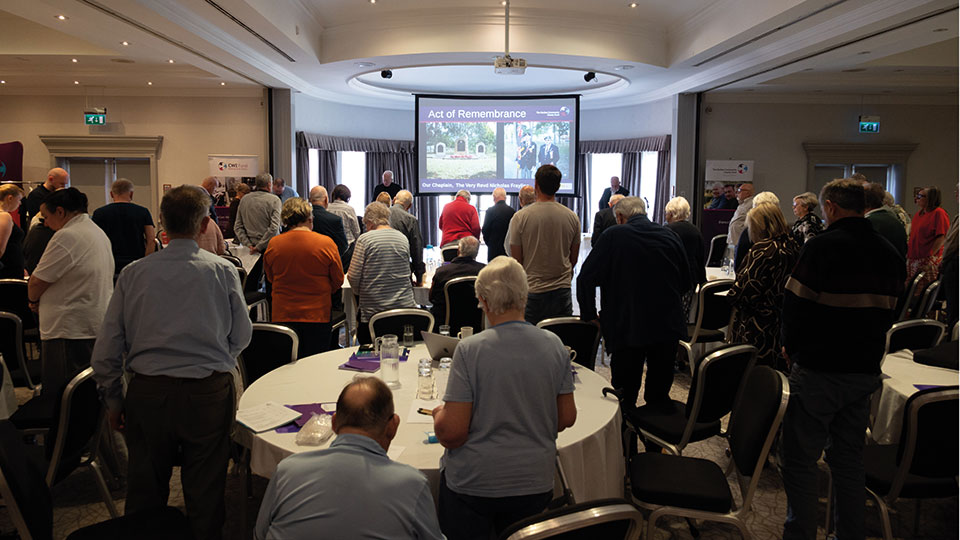
The convention opened with a formal Act of Remembrance, led by the Nuclear Communities Chaplain, The Very Reverend Nicholas Frayling. Images of the British Nuclear Test Veterans Association memorial, three striking stone monuments adorned with poppy wreaths, set against eucalyptus trees, provided a solemn backdrop, alongside the badge of the British Nuclear Test Veterans Association Combined Services. The remembrance set the tone for a day that never lost sight of who the convention ultimately serves: the men and women who participated in Britain’s nuclear testing programme, and their families.
During the Act of Remembrance, Nicholas spoke at length about the lives and service of both Don James and Jeff Liddiatt, who sadly passed during the last 12 months. We featured Don James’s obituary in a previous edition. Readers will find the official Obituary for Jeff in this issue.
Chairman’s Address: A Decade of Impact
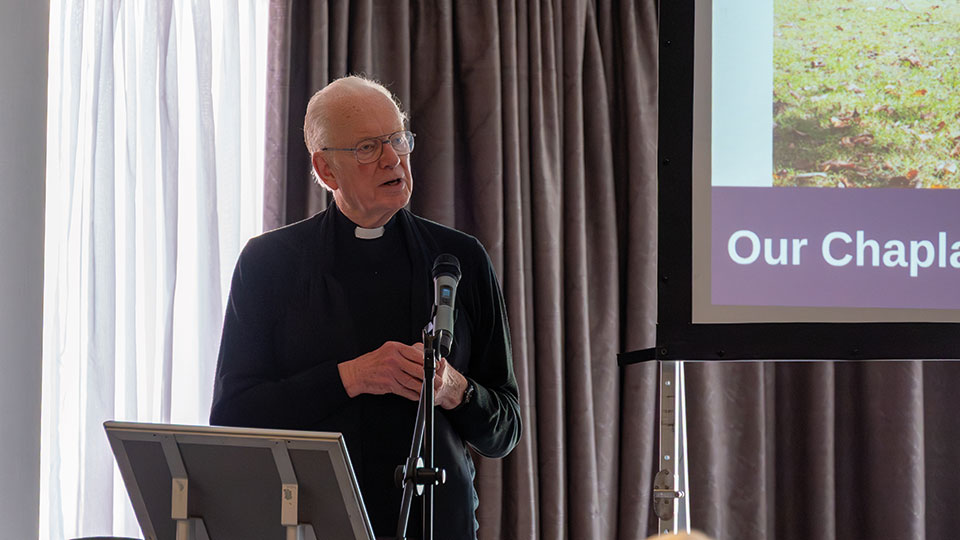
NCCF Chairman Ian Hall opened proceedings by reflecting on ten years of the charity’s work, emphasising the community’s resilience and the importance of standing together through changing times.
Financial Review: ‘More Given Out Than We Started With!’
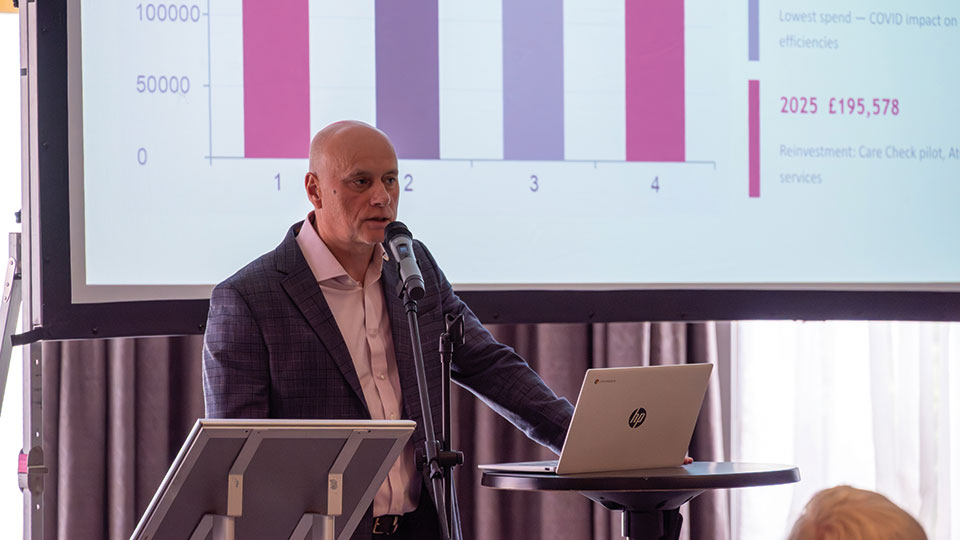
One of the most striking presentations of the morning came from Financial Director Will Long, who delivered the charity’s Four-Year Financial Oversight Review covering 2022 to 2025.
The headline figure told a remarkable story. Over the NCCF’s ten-year history, the charity has distributed more than the entire value of its original endowment, and yet that original capital remains substantially intact today. With total reserves standing at £2.99 million in 2025 and the fund managed by BlackRock, the charity operates with careful stewardship: dividends fund goods and services for beneficiaries, whilst capital drawdown covers grants and operational costs.
Will walked delegates through four years of expenditure that reflected the charity’s evolving priorities. The peak year was 2022, at £313,788, driven by Phase II research activity at Brunel University and the launch of the Centre for Health Effects of Radiological and Chemical Agents (CHRC). Spend dropped to its lowest point in 2024, £147,096, partly due to the lingering effects of COVID on grant applications, before rising again to £195,578 in 2025 as the charity reinvested in new initiatives.
The investment returns told a similarly honest story. Strong positive returns in 2022 and 2023 gave way to a loss of £341,877 in 2024, before recovering modestly in 2025. Will’s concluding words carried real weight:
“Thanks to the foresight of the fund’s founder, Jeff Liddiatt, the NCCF was built to last. Many of the people we support today were healthy a decade ago. Life changed, now they do, and we were there when it did.”
Community Care Check: Innovation from Crisis
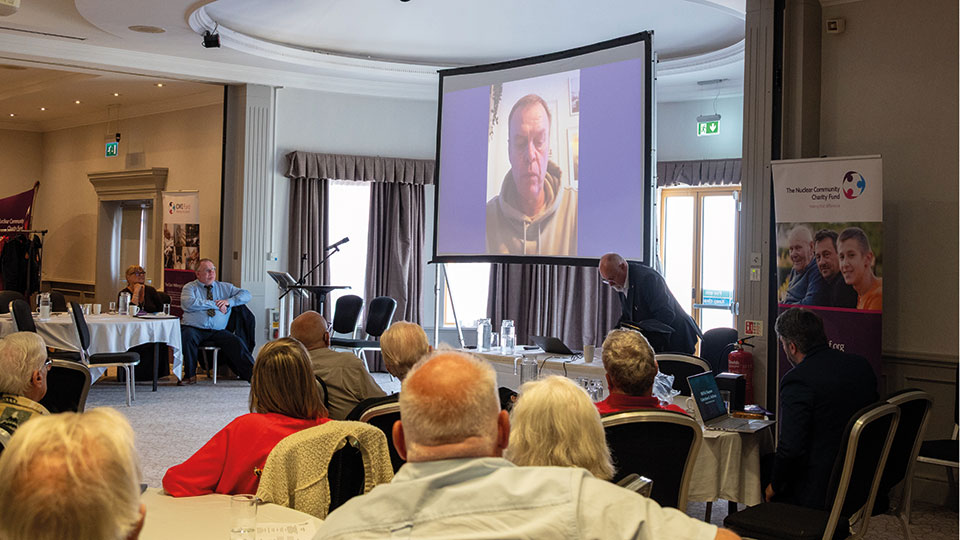
Perhaps the most compelling story of the morning was the development of the Community Care Check, a proactive outreach programme born, somewhat unexpectedly, out of the disruption of the COVID pandemic.
When lockdowns led to a sharp drop in grant applications, the NCCF used the quiet period to design something new: a structured way to reach out to beneficiaries who might not know they needed help or might not feel able to ask. A successful funding bid to the Office for Veterans Affairs secured a £70,000 two-year grant, and the pilot launched in January 2024, achieving a significant increase in scheme participation almost immediately. A comprehensive impact report, completed by mid-2025, now shapes the charity’s long-term strategy.
The programme also brought with it broader administrative improvements, including app-based systems that have streamlined the grant application process across the board.
BNTVA Connect and the VALOUR Partnership
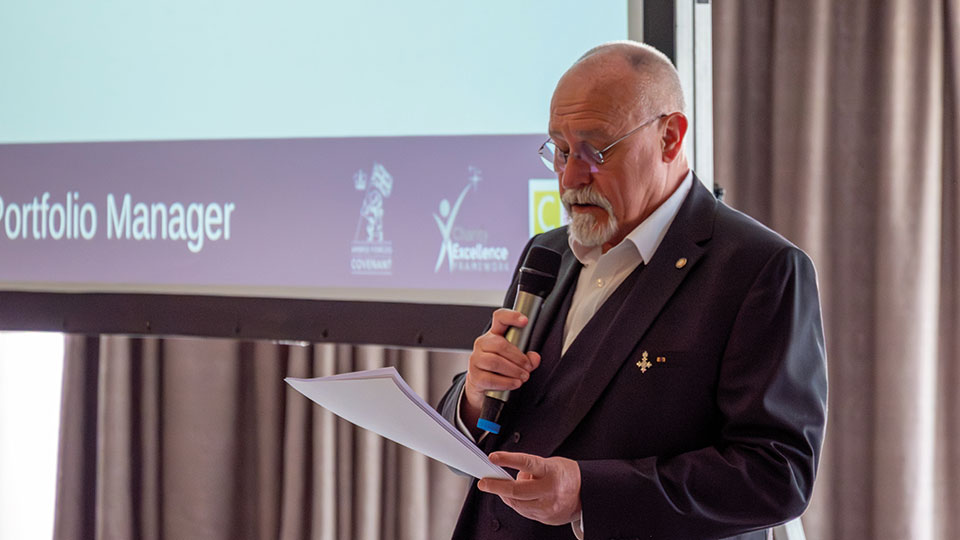
Portfolio Manager Nigel Heaps MBE presented on behalf of BNTVA Connect, the community networking platform developed for atomic veterans and their families. The presentation introduced delegates to a significant new partnership: VALOUR, a Ministry of Defence initiative aimed at creating a nationwide network of support for veterans.
The message was clear: a nationwide network is not simply desirable; it is essential. For a community that is geographically dispersed, ageing, and often isolated, the ability to connect beneficiaries with the right support at the right time is everything.
We will be bringing you more about BNTVA CONNECT and VALOUR in the next edition.
BNTVA Museum CIC, Update
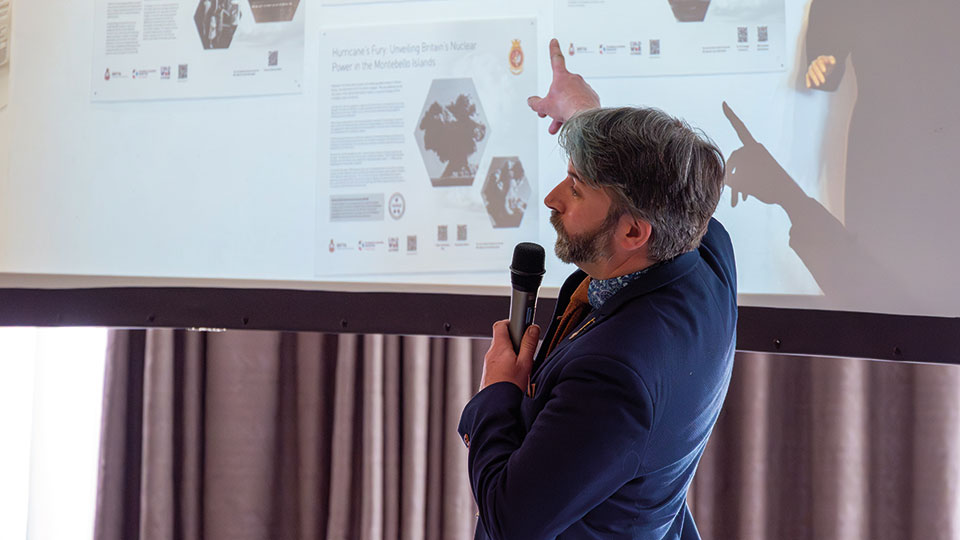
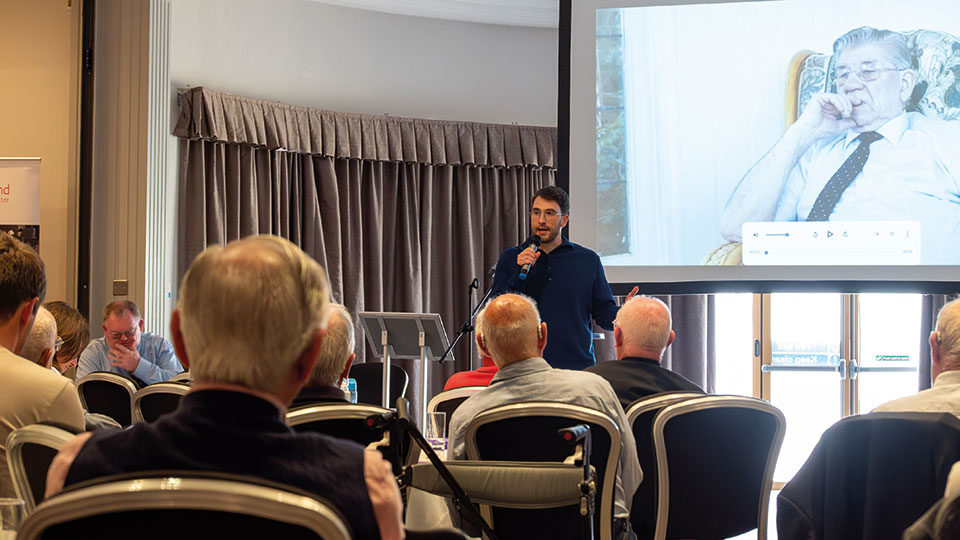
Wesley Perriman, BA (Hons) MA, Curator of The BNTVA Museum, presented on how preserving nuclear test heritage through oral histories, artefacts, and records directly benefits veterans and their families by ensuring their stories are remembered and educationally accessible.
Wesley Perriman, BA(Hons) MA, Curator of the BNTVA Museum, presented on the work of preserving nuclear test heritage for future generations. With veterans passing away at an increasing rate, the urgency of capturing and protecting oral histories, artefacts, and records grows every year. Perriman’s work sits at the intersection of remembrance and education, ensuring that what these men and their families experienced is never forgotten.
LABRATS International and ATR 2026
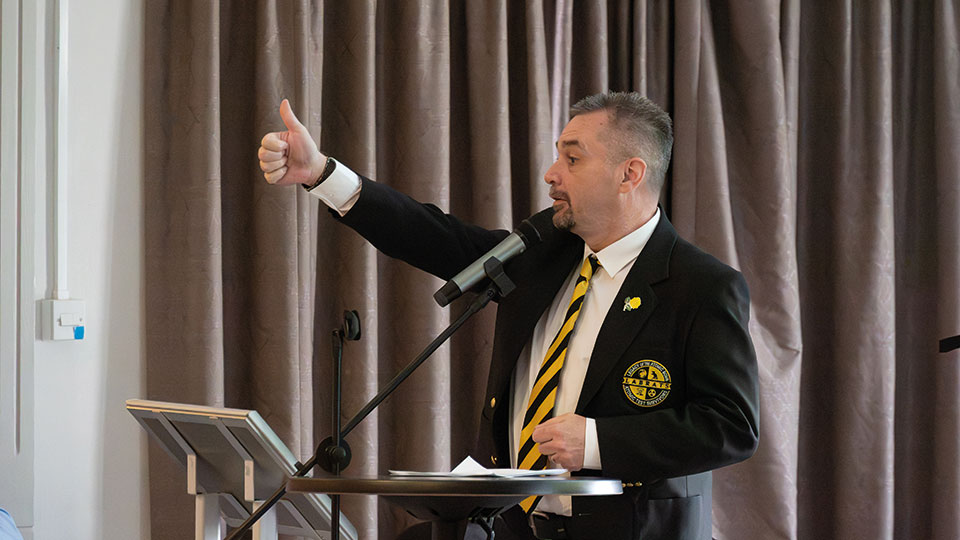
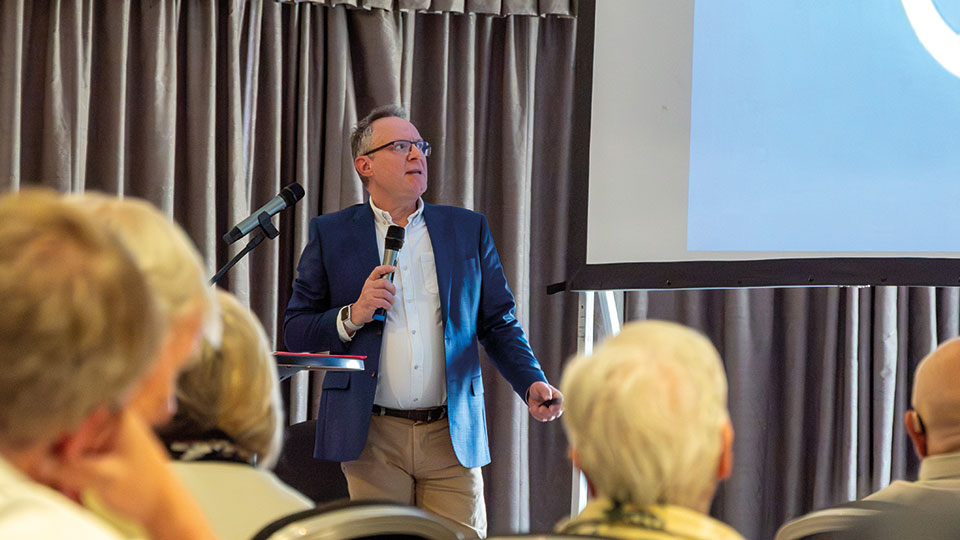
After lunch, delegates heard from Alan Owen, MBA CITP FBCS FLPI of LABRATS International. His presentation about the upcoming All Tests Reunion 2026 (ATR2026) at Pontins, Sand Bay, Weston-Super-Mare, from 14th to 18th September 2026, aims to strengthen community bonds and support networks through a comprehensive programme of activities and community updates.
The reunion promises a full programme including community updates, messages of support from MPs, Kiribati dancers, entertainer Marvis Muoneke, a quiz, raffle, golf, and the LABRATS AGM. In a gesture of remarkable generosity, GB News has funded a discounted rate of £99 per person for the first 120 places, making the event accessible to as many members of the community as possible.
Photographs from previous reunions showed a community very much alive: veterans in Hawaiian garlands, laughter, old friendships renewed, and younger generations present alongside the men and women at the heart of the atomic veterans’ story.
For more information and to download a booking form visit: https://www.labrats.international/atr
How the NCCF Helps: A Practical Breakdown
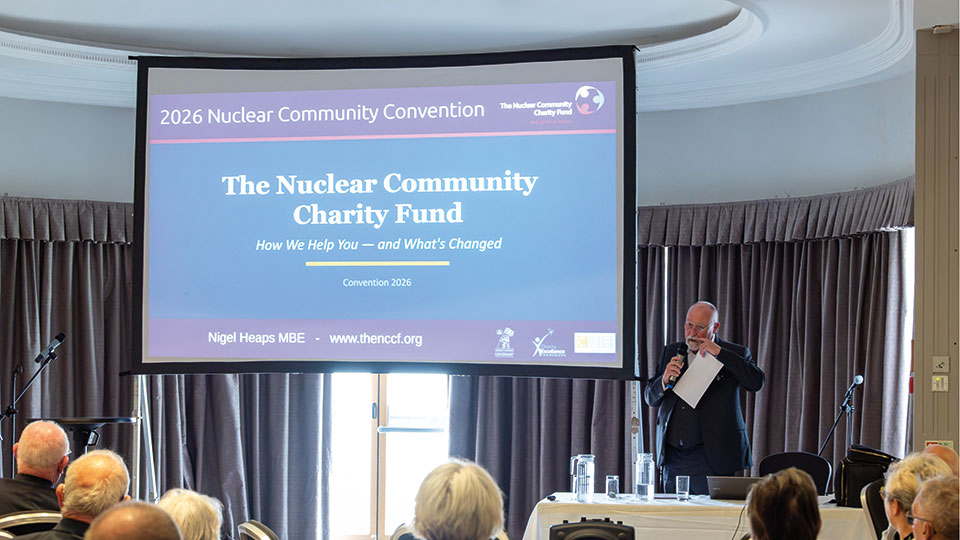
Nigel Heaps MBE returned to the stage for a detailed presentation on the NCCF’s grants and services, including the most significant process change the charity has made in years.
The NCCF supports two groups: the servicemen who took part in Britain’s Nuclear Testing Programme and their families; the spouses, children, and descendants. It operates two core funding streams. The Care, Wellbeing and Inclusion Fund provides one-off grants for practical needs, walk-in wet rooms (£6,000–£11,000), wheelchairs and mobility scooters (up to £9,795), central heating systems (£8,252), medical procedures (£5,853+), urgent domestic issues, and specialist beds and hoists. The Ground Zero Support Grant provides ongoing contributions towards care costs when the NHS or local council cannot cover everything, is reviewed and renewed annually, and payments are made directly to care providers.
The biggest change for applicants is a welcome simplification. Previously, applicants had to itemise every single bill and outgoing by hand, including pension, attendance allowance, PIP, rent, council tax, gas, electricity, water, phone, TV licence, care agency fees, and more. Now, applicants simply send three months of bank statements, along with a note of any annual costs and savings on a simplified form. No more complicated forms. No chasing letters. The statements contain everything the charity needs to make a fair and rapid assessment, and because the information is clear and complete, decisions can be made faster, helping people sooner.
The transition to this method also allows the charity to review the applicant’s income against their health and personal circumstances, enabling the NCCF to signpost the applicant to any additional benefits and support they may not currently be receiving.
The NCCF can be reached at
www.thenccf.org, email office@thenccf.org or by calling 07844 187800.
The Wartime Broadcasting Service: Britain’s Secret Voice in the Nuclear Age
One of the convention’s most thought-provoking moments came courtesy of Iain Betson, whose presentation on the Wartime Broadcasting Service (WTBS) offered delegates a rare and genuinely fascinating glimpse into one of the Cold War’s best-kept secrets, and one that sits at the very heart of the nuclear veterans’ story.
The Wartime Broadcasting Service was the BBC’s classified contingency plan for broadcasting to the British public in the event of a nuclear attack. Never used, never publicly acknowledged during its operational years, and known to only a handful of people outside government and the Corporation itself, the WTBS was nonetheless maintained in a state of readiness for decades, a ghostly infrastructure built on the assumption that nuclear war was not merely possible, but had to be planned for.
The system was designed to operate from a network of secret, hardened studios and transmitter sites dispersed across the United Kingdom, capable of surviving or at least functioning in the immediate aftermath of a nuclear strike. The BBC’s role, in such a scenario, would have been to broadcast official government emergency information to whatever remained of the civilian population: instructions on shelter, contamination, food and water safety, and the grim business of surviving in a post-attack landscape.
At the heart of Iain’s presentation was a piece of original studio equipment, a mixing desk of distinctly mid-twentieth-century character, its faders, switches, and selector panels bearing the unmistakable aesthetic of British broadcasting engineering from the era. Labelled with designations including OS1, OS2, and an array of channel designations running from standard BBC networks through to outputs marked for studio talkback and outside broadcasts, the desk is a physical artefact of a system that was always meant to be invisible. To see images of the equipment displayed at a convention of atomic veterans carried a particular poignancy.
The WTBS was not simply a broadcasting contingency. It was part of a much wider architecture of civil emergency planning that ran through the Cold War decades, a period during which Britain’s nuclear testing programme was at its most active, and during which the men now represented by the NCCF and BNTVA were being sent to witness and participate in atmospheric nuclear tests at sites including Maralinga in Australia, Monte Bello Island, and Christmas Island in the Pacific.
Those veterans served at a time when the British state was simultaneously developing its nuclear arsenal and preparing, in secret, for the possibility that it might one day be used against them. The WTBS represents one strand of that preparation, the acknowledgement, buried deep in government planning documents and BBC contingency files, that a nuclear exchange might happen, that civilian life might continue in some form afterwards, and that the BBC’s voice would need to be heard telling people what to do.
For many delegates at the convention, this context is not abstract history. They were the young servicemen sent to those test sites. They watched the detonations, some with nothing more than a hand over their eyes for protection, told to turn their backs. They came home, got on with their lives, and watched as the Cold War played out around them. The Wartime Broadcasting Service was part of the world they lived in, even if they never knew it existed.
Iain’s presentation drew a direct line between the official secrecy surrounding the WTBS and the official secrecy that surrounded the nuclear testing programme itself, a culture of confidentiality that left veterans unable to speak about what they had seen, denied for decades that any harm had been done, and fighting for recognition and support long after the last test was conducted. In both cases, the British state built elaborate systems it never wanted the public to fully understand.
The fact that original WTBS equipment survives gave the presentation an emotional resonance that went well beyond its historical interest. This was not simply a curiosity from broadcasting history. It was a tangible piece of the world that made the atomic veterans’ experience possible and that, for so long, kept it hidden.
Iain’s work in preserving and presenting this material sits alongside the efforts of the BNTVA Museum, LABRATS International, and projects like Operation Fallout in building a fuller, public record of what Britain’s nuclear programme meant, not just strategically, but for the human beings at its centre.
Professor Chris Hill
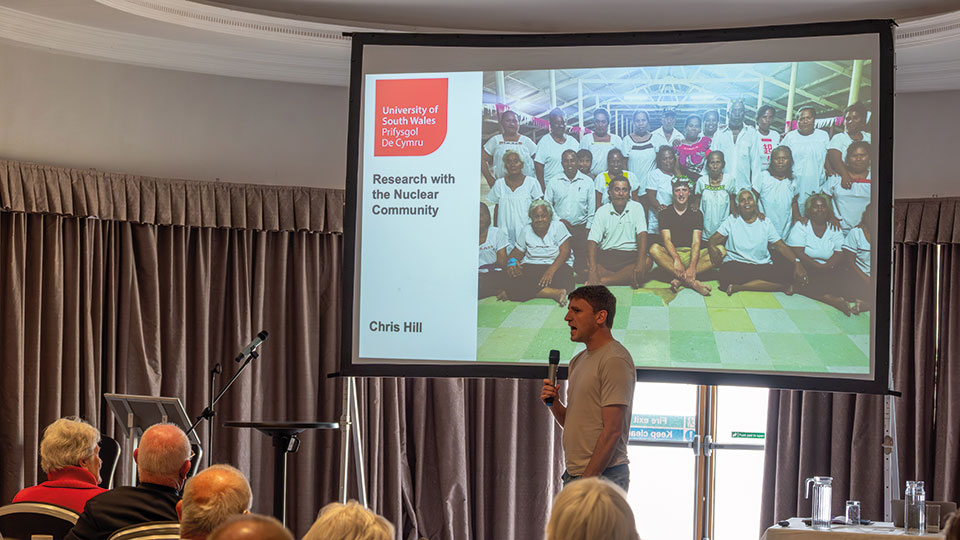
Prof Chris Hill gave a presentation on the conclusion of the Oral History of British Nuclear Test Veterans project and his plans for further work amongst the indigenous peoples of the test sites. He described the Gilbertese philosophy regarding the taking and reuse of relics from the nuclear tests. They see it as a way to reconnect with the past and ensure that history does not pass but remains part of the present.
Chris went on to discuss the Nuclear Justice Project, led by the University of Liverpool School of Law and Social Justice and the Centre for People’s Justice. He said at the centre, the students and legal advocates were working on The Merlin Files: cataloguing and analysing over 20,000 declassified Ministry of Defence documents relating to Britain’s 1950s nuclear testing programme in the Pacific and Australia. The goal is to uncover medical and scientific evidence hidden for decades to assist the surviving UK nuclear test veterans in their ongoing legal battle for government recognition, proper health tracking, and compensation.
Operation Fallout
Jamie Sefton presented Operation Fallout, a Stronghold Media film project that is building on Jamie’s original play ‘A Thousand Sons’. Launched in 2025, the initial series of short films is now well underway, with a main feature also in the pipeline. The project contributes to the growing body of creative work telling the story of Britain’s nuclear testing programme, work that is increasingly important as our veteran generation ages.
The Next Ten Years: Nuclear Community Lived Experience Network
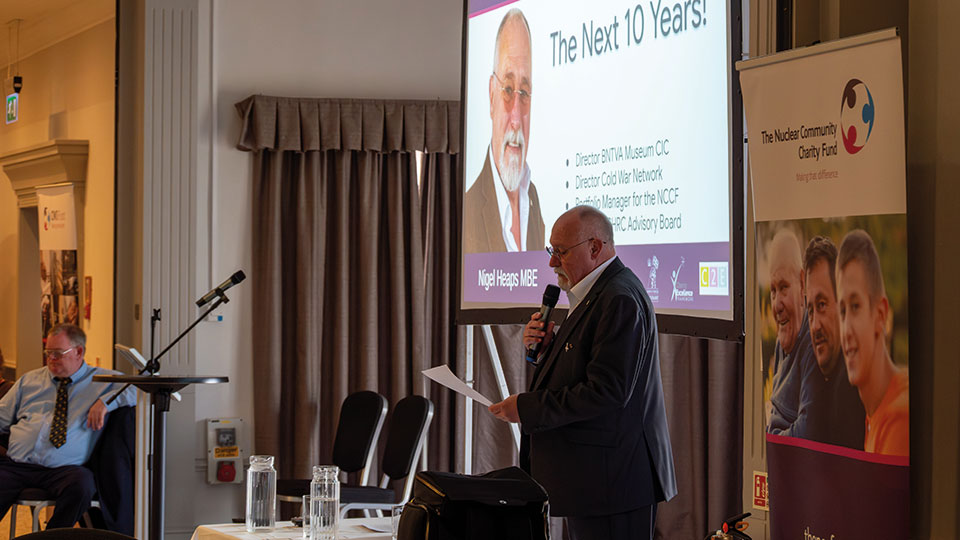
The convention’s penultimate session was delivered by Nigel Heaps MBE, who outlined an ambitious operational blueprint for the decade ahead: the Nuclear Community Lived Experience Network (NCLEN).
The central philosophy is a shift away from services that “do to” or “do for” members, towards genuine co-production, working with the community as equal partners in designing the support they receive. Nigel described it as “a meeting of minds,” moving beyond passive data collection into active dialogue. The network’s guiding ethos is simple: working together, learning together.
The ultimate goal is to provide the community with a clear voice accessible to all organisations working for its benefit. The NCLEN will allow organisations to directly gather anonymous information and opinions from community members, which can be contrasted with respondent demographics to produce accurate insights into community opinion and needs to inform the development of activities and services for the community.
This is a community-wide initiative, further information will be published when ready.
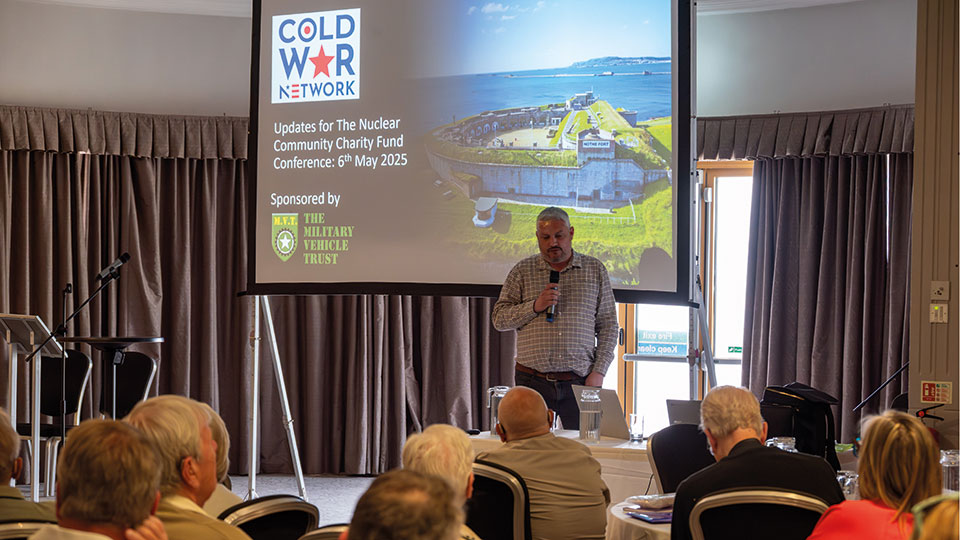
Cold War Network
Dr. Peter Robinson, Director of the Cold War Network CIC, presented the final section of the convention. Peter told guests about the extraordinary year of development the Cold War Network had undergone, from receiving a National Lottery Fund grant to promote Cold War Heritage Week to recruiting four new specialist directors, delivering both insightful webinars, hosting meetings and tours at some of Britain’s most amazing Cold War sites, the network is going from strength to strength.
You can find out about all the exciting things the CWN has been doing this year in an upcoming article.
Closing and Gala Dinner
The convention closed with the same community spirit with which it opened. Delegates were reminded that a Gala Dinner would follow in the evening, to celebrate ten years of making that difference, and to launch the next ten.
The 2026 Nuclear Community Convention was a reminder that Britain’s atomic veterans, and the remarkable network of people who stand alongside them, are still very much present, still fighting, and still being heard.


