

In an era of tightening budgets and increasing pressure to broaden public engagement, the museum sector is at a critical juncture. The HMS Campania exhibition presents a powerful and timely alternative: a sophisticated hybrid model that strategically blends lightweight, physical display panels with a rich, expansive online multimedia facility. This approach fundamentally redefines the balance between physical presence and digital depth, delivering a more accessible and sustainable form of public history.
How the Hybrid Model Exemplifies ‘Low Cost’ The physical tour primarily consists of durable, printed foam boards that can be easily and affordably shipped. This approach effectively eliminates the most substantial costs associated with traditional tours:
- Transport and Insurance: Shipping lightweight foam boards is far more affordable and straightforward than moving priceless historical artefacts, which require climate-controlled transport, specialised crews, and multi-million-pound insurance policies.
- Exhibition Production: The Campania model consolidates design into a single, upfront phase. The display panels are produced once, creating a standardised “plug-and-play” system that eliminates redundant and costly efforts for each venue on the tour.
- Cost Forecasting: The model offers predictable logistics with a fixed number of panels of known weight and size. This clarity makes budgeting more transparent and straightforward, reducing financial risks.
Achieving High Impact Through Physical-Digital Synergy The brilliance of the Campania model lies in the seamless integration of its physical and digital components. The printed foam boards provide a tangible anchor for the experience, while QR codes on these boards serve as direct gateways to comprehensive online resources. This blended approach leverages the best of both worlds:
- Physical Presence: The boards create a traditional exhibition atmosphere, effectively guiding visitors through the key themes of the ship’s remarkable story.
- Digital Depth: The online portal offers a rich, multi-layered narrative that a static display could never provide. Visitors can explore detailed schematics, archival videos of atomic detonations, the ship’s role in the Arctic Convoys, and its final historic mission as the flagship for Operation HURRICANE. Supplementary content includes image galleries, oral histories, period radio transmissions, and professionally produced podcasts.
The QR Code: A Bridge Between Worlds In this hybrid model, the QR code serves as more than just a gimmick; it is the essential link between the physical and digital worlds. This strategic integration allows for a host of dynamic possibilities: instant information, personalised guides, immersive multimedia, interactive engagement, and virtual extensions to partner institutions.


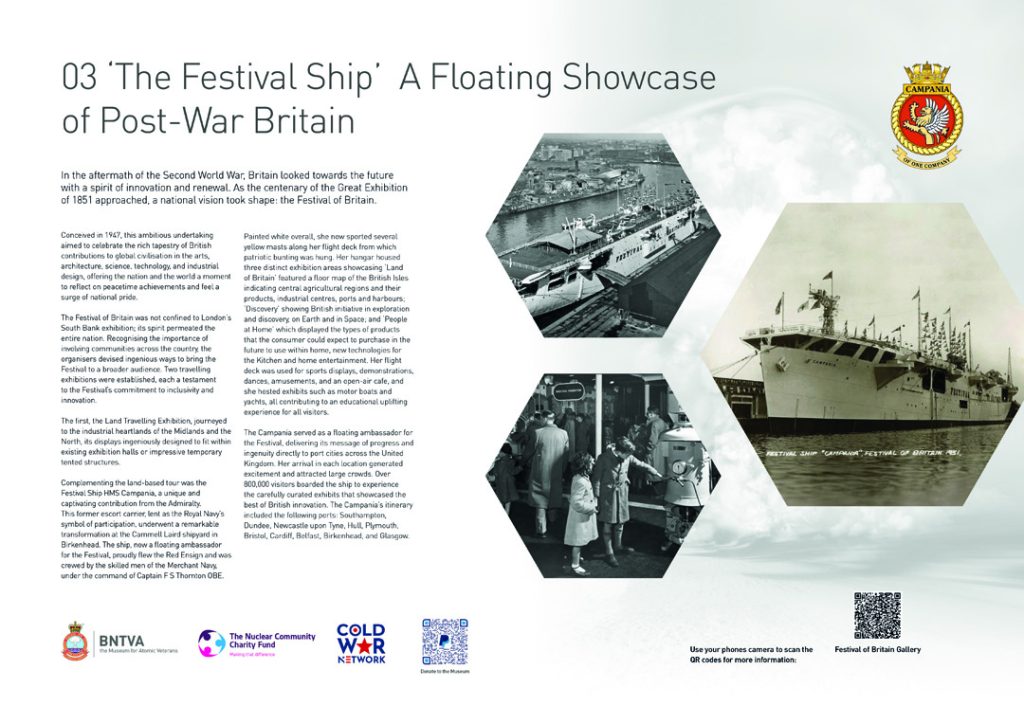
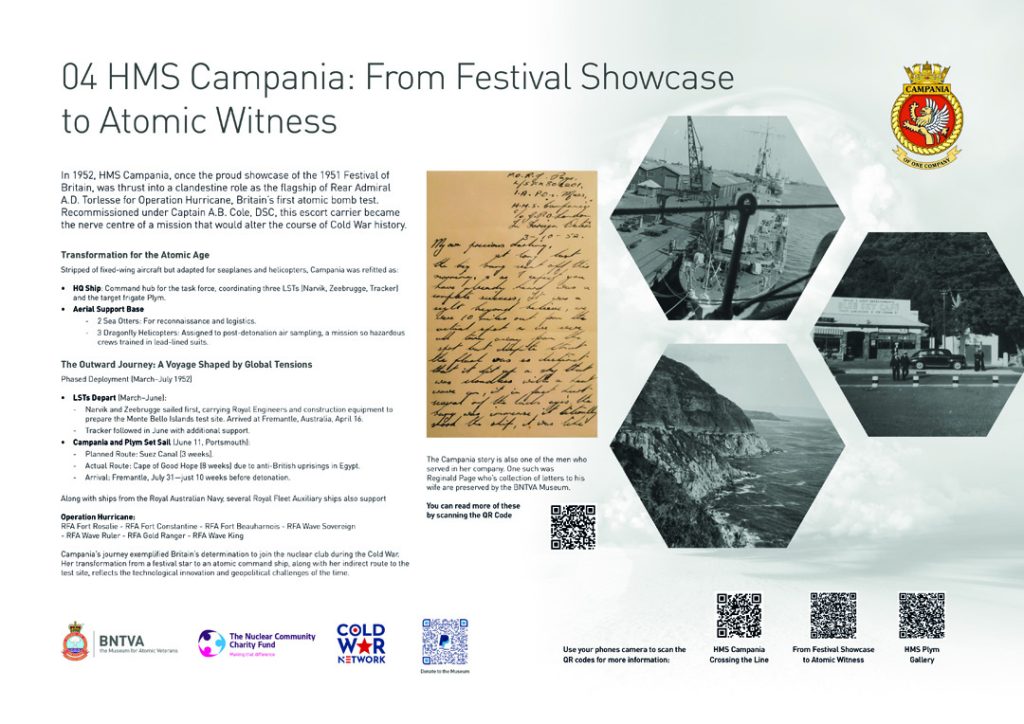


Digital Storytelling: From Passive Observers to Active Participants The narrative of HMS Campania, enhanced by this powerful hybrid model, serves as an excellent vehicle for digital storytelling techniques. This approach is crucial for modernising museum engagement, aiming to transform visitors from passive readers of display panels into active participants in the unfolding story. By inviting users to “explore the flight deck” through a 360-degree interactive photograph or to “listen to a veteran’s account” of a nuclear explosion, the exhibition creates a powerful emotional connection.
Challenges and Future Considerations Although the hybrid model offers significant advantages, it also presents several challenges that require careful planning. The success of the overall experience depends on a smooth and intuitive user journey that connects the physical and digital realms. This connection assumes that reliable and free internet access is available at the venue, which is not always guaranteed. Additionally, it relies on the digital literacy of the visitors. The design of the physical panels is crucial. They need to be visually appealing enough to attract interest on their own while also serving as elegant signposts to the richer online content.
In conclusion, the HMS Campania exhibition presents a compelling blueprint for the future of touring exhibitions. Its intelligent hybrid model significantly reduces the costs and complexities that have long challenged museum tours, making powerful storytelling accessible to more institutions and broader audiences. This approach demonstrates that by thoughtfully and creatively integrating physical and digital elements, museums can create resonant exhibitions that are more accessible, sustainable, and deeply engaging for a 21st-century audience.
From preserving the past, we turn to the present and future with the latest news and remembrances from across the community.


